Industry Viewpoint: A third-generation packer's outlook on organic citrus for 2026–27
Industry Viewpoint: A third-generation packer's outlook on organic citrus for 2026–27
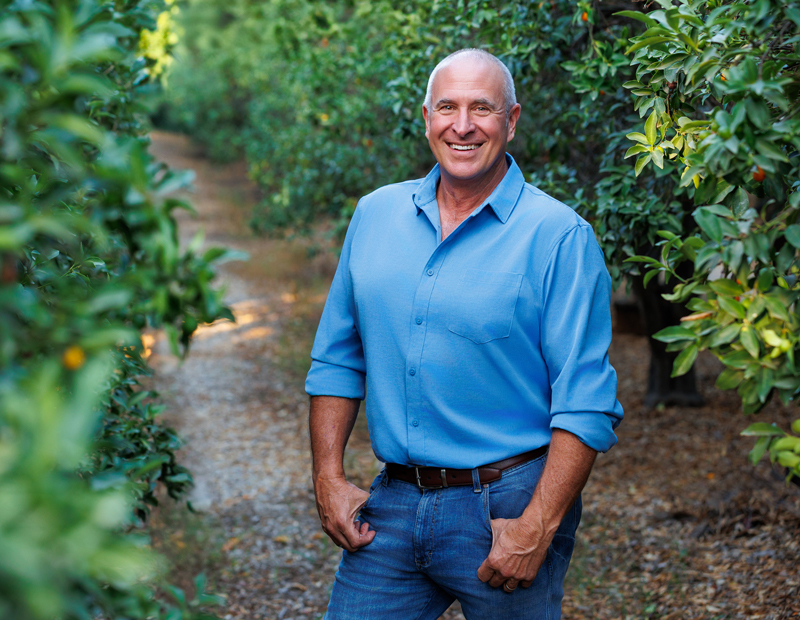
I didn't choose the citrus business. The citrus business chose me — and I mean that as the highest compliment I know how to pay.
I grew up around the groves and alongside the packinghouse floor. Long before I ever held a title or signed a contract, I was watching my grandfather move through the operation with the kind of quiet authority that doesn't come from a job description. It comes from ownership — not just of a business, but of a standard. My father carried that same standard. He took immense pride in every job the company created, in every client relationship he built and in the idea that serving others well was not a strategy — it was a way of life.
I absorbed all of it. The planting cycles, the irrigation decisions, the pruning philosophy, the grading standards, the cold chain discipline. I pestered the people on the floor with questions because I genuinely needed to understand how everything connected from the moment a piece of fruit left the tree to the moment it reached a consumer's table. The men and women who worked in our packinghouse weren't just employees. They were an extension of our family, and they shaped the way I think about this business to this day.
Since 1986, I've worked full time at Blue Banner Co., building on what my grandfather started and what my father grew. Now, as vice president and at the helm of Goody, our new direct sales division, I've invested more than 40 years of heart and strategic focus into carrying this legacy forward with integrity. And right now, I'm writing to you from what I believe is the most consequential stretch of transformation this industry has seen in my lifetime.
If you're in citrus — growing it, packing it, shipping it or buying it — the next 18 months are going to separate operations that positioned themselves well from those that didn't. Here's what I'm seeing.
The Organic Wave Isn't Cresting — It's Still Building
Let me start with the headline number, because it stopped me cold when I first read it: organic citrus sales climbed 18.1 percent in 2025. Not organic produce broadly — organic citrus specifically. That's part of a larger story in which total U.S. organic food sales reached $70.1 billion last year, growing at 6.8 percent — double the pace of the conventional food market. For the third consecutive year, organic outpaced the total marketplace.
I've watched the organic segment build for over two decades, and I can tell you that kind of sustained momentum isn't a trend anymore. It's a structural shift. The consumers driving it — particularly younger households — aren't buying organic citrus because it's fashionable. They're buying it because they've come to see the USDA Organic seal as a baseline standard of trust. When I sit across from our retail buyers today, they're not asking whether to expand their organic citrus set. They're asking how much they can get and when.
The global data reinforces what we're seeing on the ground. The citrus fruits market overall is projected to climb from roughly $150 billion in 2026 toward $160 billion by 2027, with organic as the fastest-growing lane within that expansion. Demand for organic citrus has increased nearly 27 percent across U.S. retail channels, and fresh citrus purchases overall are up 31 percent at retail. Those aren't numbers you ignore — and they're numbers that validate decades of commitment to quality and customer-centered service.
What's Actually Driving the Demand
My father had a saying I've carried with me my whole career: if you serve people better than anyone else, everything else takes care of itself. The market data is proving him right in new ways.
Health and immunity have become permanent purchase drivers, not pandemic-era habits that faded when the world reopened. Consumers have genuinely locked in the idea of citrus — particularly organic citrus — as functional food. Nearly half of U.S. consumers now report prioritizing citrus for daily nutrition. The wellness-shot category, citrus-infused beverages, and immune-support supplements all feed back into fresh and organic demand in ways that simply weren't factors a decade ago.
Then there's the transparency piece, and this one hits close to home for me. Consumers — especially younger buyers — want to know where their food comes from, how it was grown and what was or was not applied to it. They want to trust the source. The organic certification answers those questions in a single label, but what truly backs that label is the integrity of every person and every operation in the supply chain. At Goody and Blue Banner, we don't take that lightly. The reputation we've built over three generations is only as strong as the last shipment we sent out the door.
The question I field most often from retail buyers and industry contacts is some version of this: how long can organic citrus sustain its price premium over conventional?
My answer is the same as it's been for years, and the market keeps validating it: as long as organic supply remains constrained relative to demand, the premium holds. And supply is constrained — structurally. The three-year minimum transition period to achieve organic certification, the real yield risk growers absorb during that window, and the ongoing compliance and documentation costs all create natural friction on the supply side. Those aren't barriers that disappear quickly.
There's also an angle to this that doesn't get discussed enough: when conventional citrus faces the disease and weather pressure it's under right now, the price gap between conventional and organic can actually narrow — not because organic gets cheaper, but because conventional gets more expensive. I've watched this dynamic play out during tight conventional seasons. Some retail buyers who came to us during those windows for bridge supply ended up converting part of their programs permanently. Once consumers experience the quality and trust the label, they tend to stay.
Looking into 2027, I expect the organic premium to remain meaningful, particularly in navels, Cara caras and the easy-peeler mandarin segment — which has become the dominant growth engine in organic citrus retail.
What I'm Watching Heading into 2027
- Import program integrity. As organic import volumes grow to fill domestic supply gaps, the certification standards applied to overseas growers must be enforced consistently and without compromise. The USDA Organic seal only holds its value if the enforcement behind it is credible and rigorous. I've watched corners get cut in import programs, and it damages everyone who has worked to build trust in the label. I expect increased scrutiny here, and I welcome it. Our customers trust us to stand behind what we ship. That responsibility extends to every source in our supply chain.
- Retail consolidation and private label growth. Major retail chains are expanding their organic citrus programs more aggressively, and private label growth within that space is accelerating. Specifications are tighter, relationships are stickier, and the expectation for consistency — in quality, volume, and traceability — is higher than it's ever been. This creates real opportunity for packing operations that have built the infrastructure and the track record to perform. It creates pressure for those that haven't. At Goody and Blue Banner, customer service isn't a department. It's the culture we've been building since the first generation. That's what earns and keeps these programs.
- Climate volatility. Over more than four decades in this business, I've watched weather patterns shift in ways that would have seemed dramatic to my grandfather. Warmer winters, irregular rainfall, late frosts in the wrong weeks — all of it touches timing, quality, and yield in ways that are difficult to predict and impossible to fully control. My guidance to anyone running a serious operation: build flexibility into your shipping calendar and be honest with your retail partners about that flexibility. The growers, packers, and shippers who navigate weather disruptions best are the ones with diversified sourcing and relationships strong enough to have hard conversations when they're needed.
The Bottom Line
My grandfather built this company on the belief that doing right by the grower and doing right by the customer were the same thing. My father built it further on the conviction that the people in the pack house — the men and women doing the work — deserved the same respect as anyone else in the building, regardless of title or position. I've tried to carry both of those beliefs forward, and they are woven into everything we do at Goody and Blue Banner today.
The business looks very different than it did when I stepped into a full-time role in 1986. We're managing organic certification chains across multiple continents, navigating international shipping programs, and serving retail buyers whose supply chain expectations would have seemed extraordinary a generation ago. But the core of it hasn't changed at all: source it right, pack it right, get it there cold, and stand completely behind what you sell. Serve the customer better than anyone else. That's still the whole game.
Organic citrus is in a genuine and durable growth cycle that I believe carries through the rest of 2026, into 2027 and well beyond. The consumer demand is structural. The supply constraints are real but navigable for operations that have built the right relationships and the right infrastructure. The opportunity is there for those who've done the work.
We've been through droughts, disease cycles, recessions, and shipping disruptions. The Mazzetti family and Blue Banner Co. have navigated every one of them, because we've never lost sight of who we're serving or why it matters.
We'll navigate what's ahead the same way. By serving others better — together, we all rise.