Dirty Dozen list again smears safe, healthy produce
Dirty Dozen list again smears safe, healthy produce
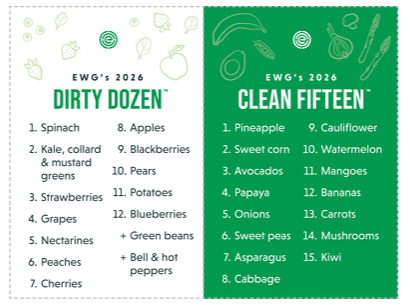
The Environmental Working Group’s “Dirty Dozen” report once again villainizes safe, healthy and affordable fruits and vegetables by misrepresenting U.S. Department of Agriculture pesticide data.
In its usual approach, EWG overstates the risk of consumer pesticide exposure by leaving out a key detail: more than 99 percent of the commodities sampled by the U.S. Department of Agriculture in its annual Pesticide Data Program (PDP) report (the source material for the EWG report) have residues well below the stringent safety standards set by the Environmental Protection Agency.
As USDA reports have consistently shown over the years, the latest report demonstrates that the vast majority of the commodities sampled had residues well below the established EPA safety standards, and more than 42 percent had no detectable residues.
The PDP tests a wide variety of both domestic and imported foods with a strong focus on those commonly fed to infants and children. Fresh and processed fruit and vegetables made up 92.8 percent of the 9.872 tested samples, including apples, avocados, blackberries (fresh and frozen), cherry tomatoes, cucumbers, head lettuce, leaf lettuce, onions, oranges, pineapples (fresh and frozen), potatoes, canned pumpkin, sweet corn (fresh and frozen) and tomatillos.
These data are further supported by FDA’s latest Pesticide Residue Monitoring Program Report and its new Pesticide Report Data Dashboard.
The USDA and FDA reports clearly demonstrate that, when farmers use pesticides, they follow the stringent laws and regulations governing pesticide use to provide safe and healthy fruits and vegetables for America’s families, including their own.
The Alliance for Food and Farming has previously pointed out that peer-reviewed research published in the Journal of Toxicology found that the recommendation in the “Dirty Dozen” list to substitute organic forms of produce for conventional does not result in any decrease in risk for consumers because residues on conventionally grown produce are so low, if present at all.
The EWG openly states that one goal of its Dirty Dozen report is to drive consumers toward organic produce, which costs significantly more than conventionally grown produce, and offers equal health benefits. It is well known and widely accepted that a diet rich in fruits and vegetables is a keystone of healthy nutrition. Studies have shown, however, that lower-income and cost-conscious consumers do not respond to the EWG report by purchasing only organic products — instead, they are increasingly likely to avoid fruits and vegetables altogether.
When a substance, like a pesticide residue, is present in extremely tiny amounts – far too small to measure using common units such as teaspoons or milligrams - scientists use parts per billion (ppb). To put it in perspective, one second out of 32 years equals 1 ppb.
The mere presence of a residue does not automatically mean something is unsafe. The EPA set limits on pesticide residues that already include huge safety margins to protect infants and children. The U.S. is unique in requiring a mandatory additional child-specific safety factor.
In a report released by the Centers for Disease Control and Prevention (CDC), only one in 10 Americans consumes enough fruits and vegetables each day, unchanged from previous survey levels reported almost a decade ago. The report states that those living below or near the poverty level were the least likely to meet produce recommendations.
EWG attempted to justify the methodology used in its latest report by comparing pesticide levels in various foods with those in the urine of people who ate those foods. However, this new approach is riddled with errors and data manipulation. Instead, AFF recommends that consumers use the pesticide residue calculator to get an accurate count of how many servings can be eaten without health effects.
Consumers who are still concerned about pesticide residues can follow FDA advice to wash fruits and vegetables under running tap water, which often removes or eliminates any low levels of residues that may be present. FDA advises never using soaps or detergents to wash produce.
You can learn more about the safety of all produce at www.safefruitsandveggies.com.